
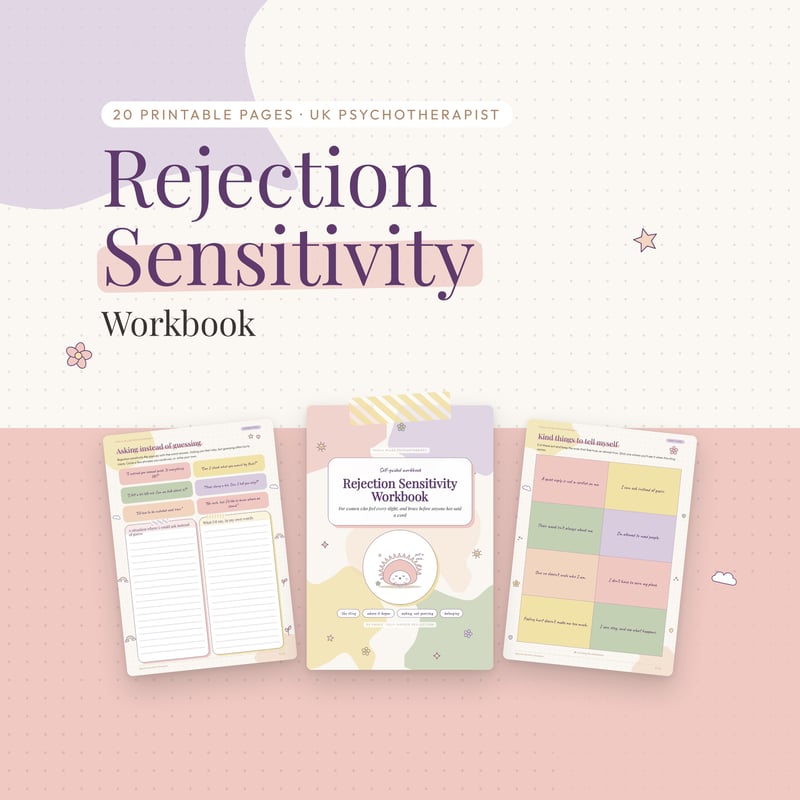
Rejection Sensitivity Worksheets
£2.99
Buy nowInstant download by email · A4 and US Letter · Print, or fill in on a tablet
For women who feel every slight, and brace before anyone has said a word.
What's inside
- What rejection sensitivity looks like for you
- What sets it off
- Where you feel it in your body
- The rejection loop
- Your protective moves
- Where it began
20 pages
About this topic
What is rejection sensitivity?
Rejection sensitivity describes how strongly you react to possible rejection, or to signs that someone might be pulling away. A short reply, an unanswered message, a neutral face in a meeting, and your body reacts as if something has gone badly wrong. You might replay it for hours, over-apologise, or pull away first so it can't hurt as much.
People with high rejection sensitivity are often very good at reading a room. That skill usually started early, in a home where it mattered to notice moods quickly. The trouble is that the alarm now goes off when nothing has gone wrong.
How to use these worksheets
Start by noticing what rejection sensitivity looks like for you, what sets it off and where you feel it in your body. The worksheets walk you through the rejection loop and the protective moves you make, such as going quiet, people-pleasing or getting in first. Then you look at where it began and the old rules you picked up about belonging.
The practical pages help in the moment: what to do before you reply to a message, how to ask instead of guessing (with phrases to use), and how to take feedback without falling apart. There is also a page for when it really is rejection, because sometimes it is, and a page on the people you can be yourself with.
These worksheets are for self-reflection. If you're wondering about rejection sensitive dysphoria or ADHD, your GP is the place to start.
You might also like


Emotionally Immature Families Workbook
A workbook for the daughter who became the grown-up too soon.
£3.49Buy now
Workbooks can help you notice patterns. Sometimes it helps to talk them through with someone.
Book a free 30-minute consultationThese workbooks are self-guided reflection. They are not therapy and do not diagnose anything. I do not offer crisis support. If you are struggling or feel unsafe, call 999, NHS 111 or Samaritans free on 116 123. Digital downloads only: nothing is posted. For personal use; please don't share or resell.