

Window of Tolerance Worksheets
£3.49
Buy nowInstant download by email · A4 and US Letter · Print, or fill in on a tablet
Understanding your nervous system, and finding your way back.
What's inside
- The window of tolerance, explained with a simple diagram
- Too much (hyperarousal): body, mind and behaviour
- Too little (hypoarousal): body, mind and behaviour
- What being in your window feels like
- Where you feel each state in your body
- Your early warning signs
17 pages
About this topic
What is the window of tolerance?
The window of tolerance is a term from the psychiatrist Dr Dan Siegel. It describes the zone where you can feel things and still think clearly. Inside it, a hard conversation is uncomfortable but manageable. You can listen, answer and stay in the room.
When stress pushes you above the window (hyperarousal), your body speeds up. Thoughts race, you snap at people, your heart won't settle and sleep doesn't come. Below the window (hypoarousal), everything slows and goes flat. You might feel numb, foggy, far away from yourself, or too tired to start anything.
Your nervous system is protecting you in both states. If you learned early that you had to cope alone, you may live near the top edge of your window: busy and capable for weeks, then a crash that seems to come from nowhere.
How to use these worksheets
Start with the diagram, then fill in what "too much" and "too little" look like for you, in your body, your mind and your behaviour. The worksheets help you spot your early warning signs and see what narrows or widens your window. Then you make a short plan: what helps you come down when you're wired, and what brings you back up when you've gone flat. The daily check-in shows your patterns over a few weeks, so you notice sooner and have more choice about what happens next.
You might also like
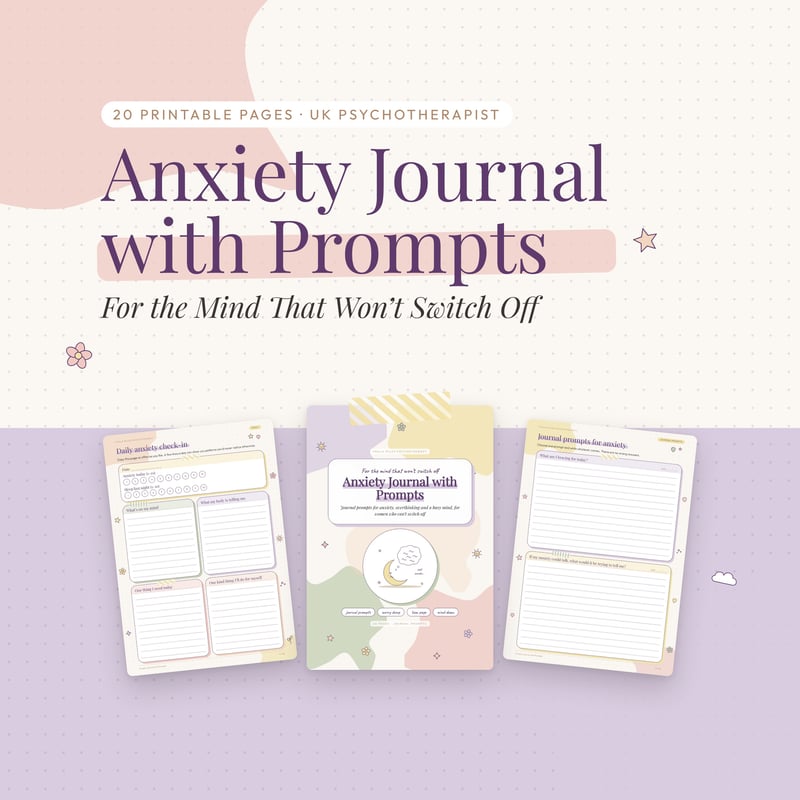
Anxiety Journal with Prompts: For the Mind That Won't Switch Off
Journal prompts for anxiety, overthinking and worry, for women who look calm on the outside and can't stop thinking on the inside.
£2.99Buy now
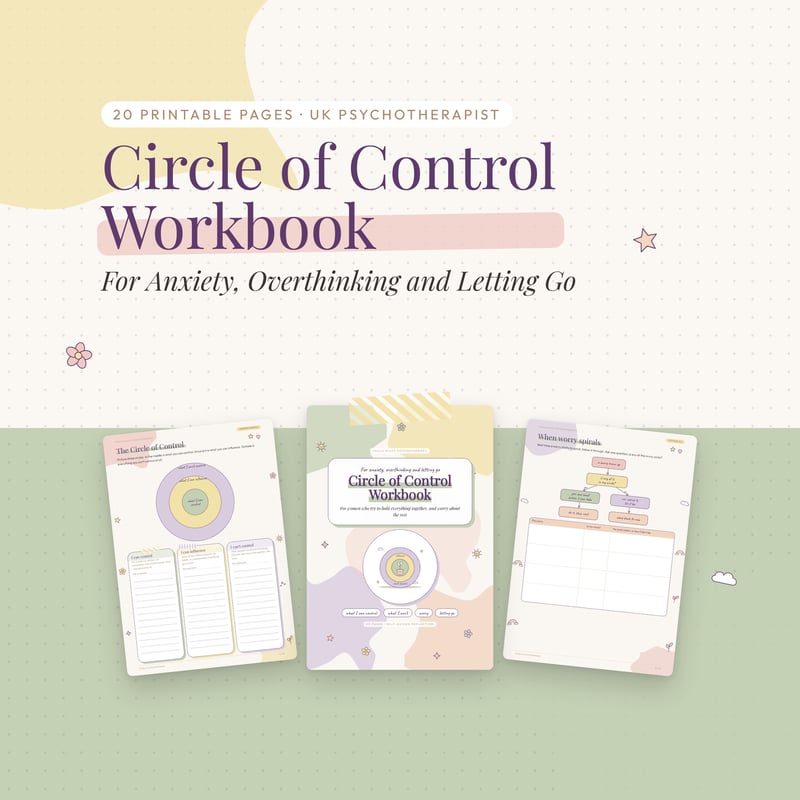
Circle of Control Workbook
For anxiety, overthinking and letting go, for women who try to hold everything together and worry about the rest.
£2.99Buy now
Workbooks can help you notice patterns. Sometimes it helps to talk them through with someone.
Book a free 30-minute consultationThese workbooks are self-guided reflection. They are not therapy and do not diagnose anything. I do not offer crisis support. If you are struggling or feel unsafe, call 999, NHS 111 or Samaritans free on 116 123. Digital downloads only: nothing is posted. For personal use; please don't share or resell.